Western World vs. Eastern Europe, Comparison of Excess Mortality Curves
UPPER GRAPH – WESTERN COUNTRIES At the introduction phase of the 5G systems [West March-April. 2020; Eastern Europe from October 2020] , the 5G technology was introduced in densely populated/visited areas such as major cities and metropolises of various kinds. These are areas which complicate the run-in phase of the systems, due to the large number of existing+new mobile base stations and a large number of additional RF systems, i.e. environments with high complexity of mobile RF bands and other RF sources, as well as, of course, customers' increasing quality requirements for system bandwidth, response times, accessibility and coverage. |
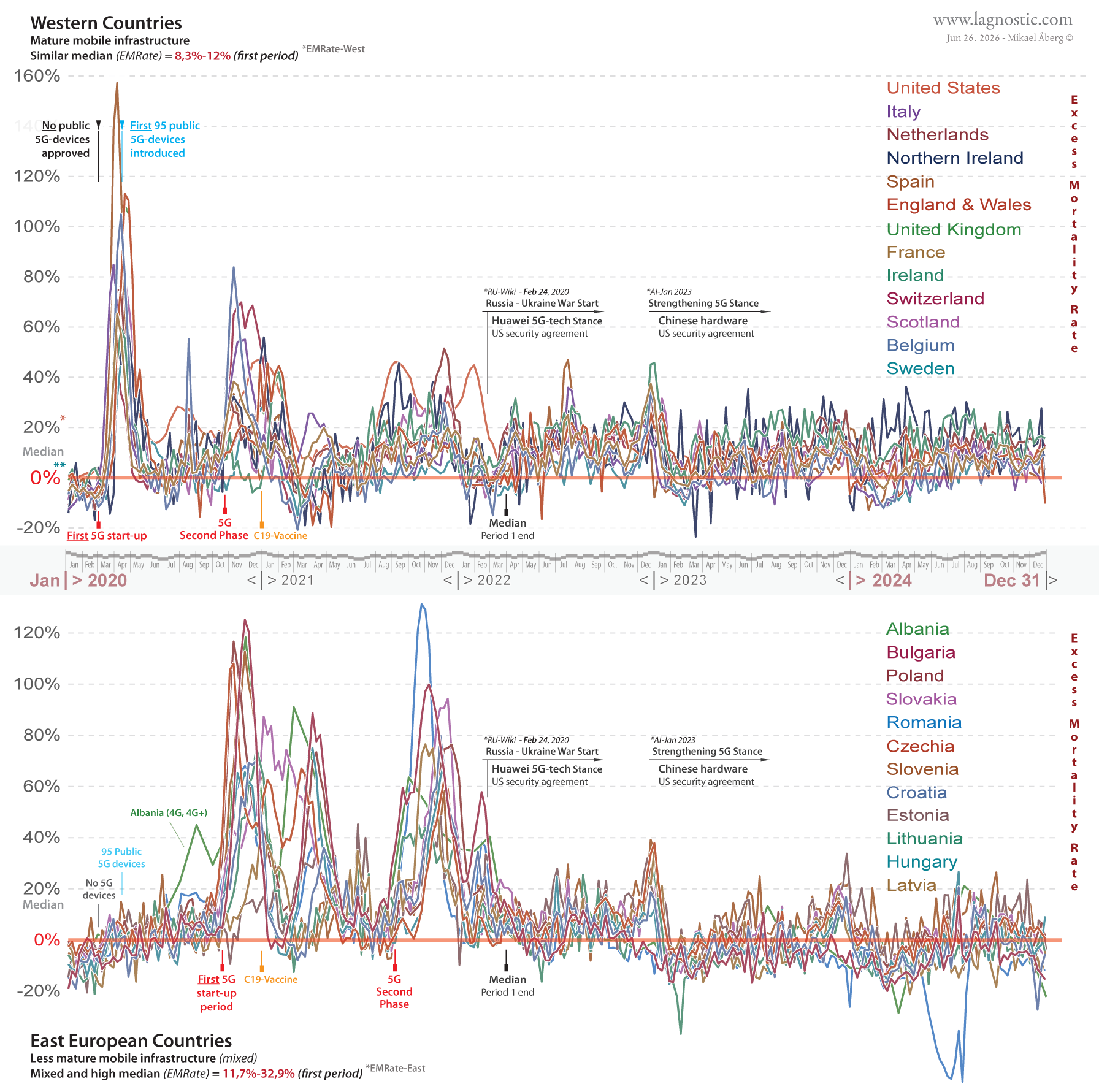 |
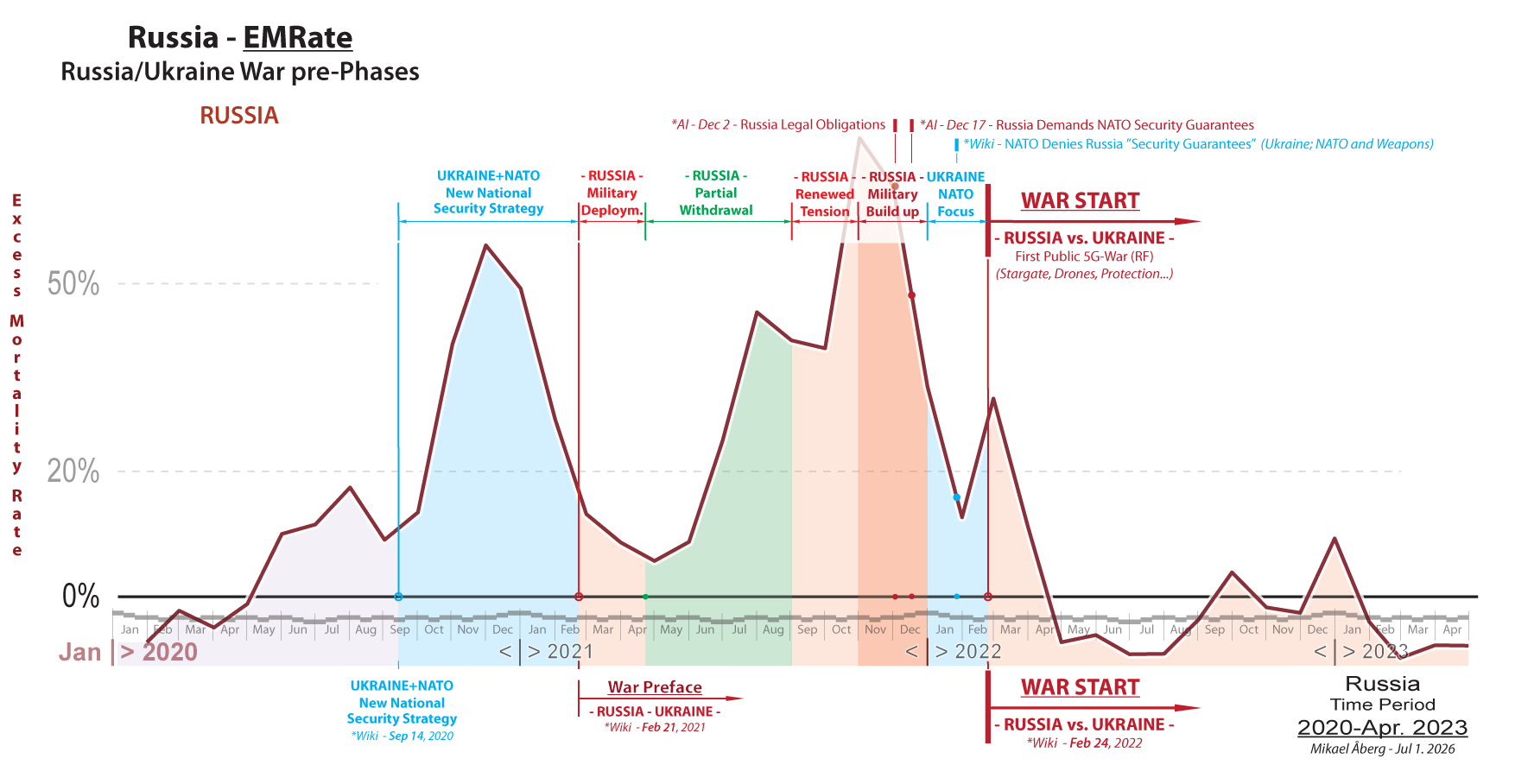
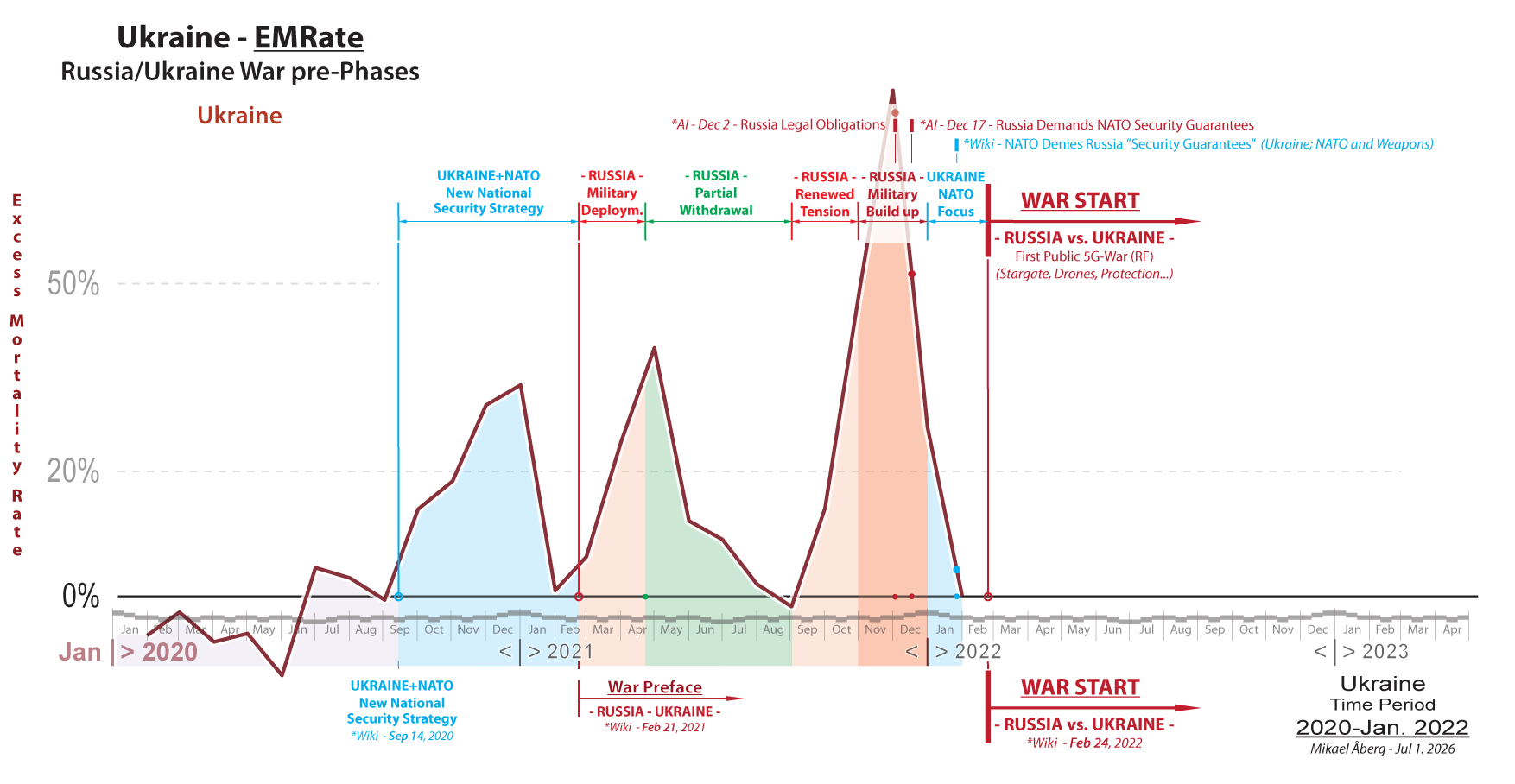
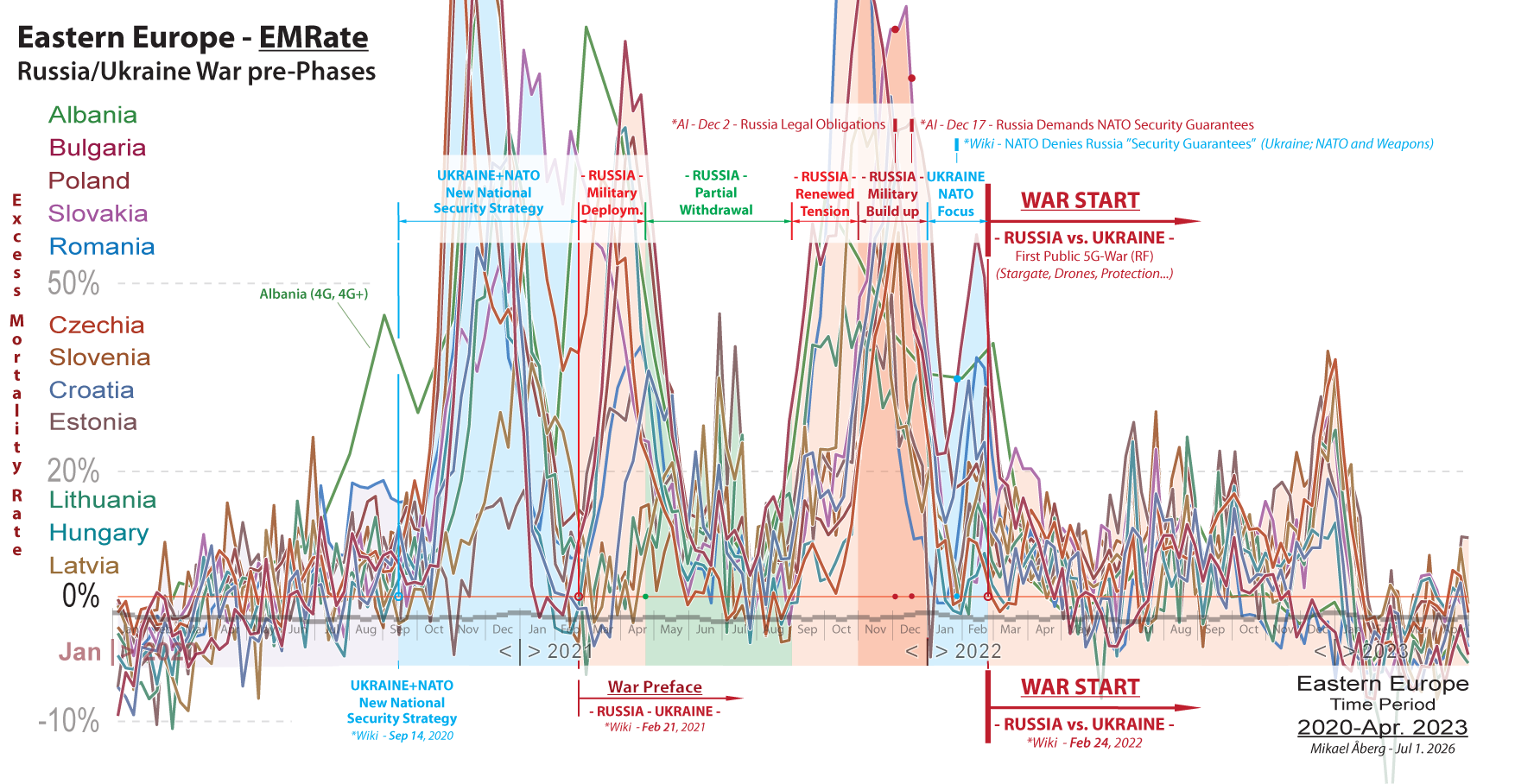
NEDRE GRAF – ÖSTEUROPA The Eastern European countries presented in the lower graph followed the same strategy as the Western world presented in the upper graph – 5G introduction in densely populated areas – however with the difference that the run-in phase of these countries started approximately half a year after the West [from October 2020], mainly due to a worse starting position in terms of mobile network infrastructure and expansion. Regarding the Eastern European mortality development, my research results indicate that the slowly rising mortality increase in the first half of 2020 indicates a relatively rapid expansion of the mobile networks infrastructure [optical fiber, base stations, hardware and software updates] with simple functional tests of installed hardware to ensure function and coverage. As commercial/customer-related 5G technology was not relevant in Eastern Europe during the time span, the expansion was certainly presented as 3G or 4G for customers. After that, the Mortality rates level off for a few months, however with elevated EMRate, where newly installed and compatible systems are updated with hardware and program code, before the start-up phases of the 5G systems. The major start-up of the 5G infrastructure began in October 2020, during which mortality rates will also explode in Eastern Europe up to and including May 2021. The exception is Albania, where they worked intensively to expand the mobile network with 4G/4G+ installations, due to the worst starting point of all in terms of mobile infrastructure, to enable future 5G installations. This is followed by phase 2 of the mobile network expansion, new hardware and infrastructure are built/updated with lower mortality rates as a result, and then again increased explosively [August. 2021] in connection with the start-up/run-in of the newly installed/updated 4G+/5G nodes. In the context of the outbreak of war between Russia and Ukraine [February 24. 2022], the pressure from the United States/NATO/EU to avoid Chinese products in the mobile networks [U.S. Security Agreement] hardened for security reasons [interception, espionage, etc]. Because Eastern European countries are major users of, Huawei [Chinese company], hardware and software in its mobile networks. 5G expansion stalled and excess mortality rates clearly decreased. A number of months later [January 2023] the pressure further hardened [US, NATO, EU] to avoid Chinese network products and since then Eastern European countries have had comparably lower EMRate. Note. Western countries [UPPER GRAPH] also make use of Chinese mobile infrastructure, hence similar patterns can be discerned, though to a lesser degree, dependence on these products is therefore less and there is an active exchange campaign of Chinese network technology in favour of US approved mobile technology, infrastructure and software. |
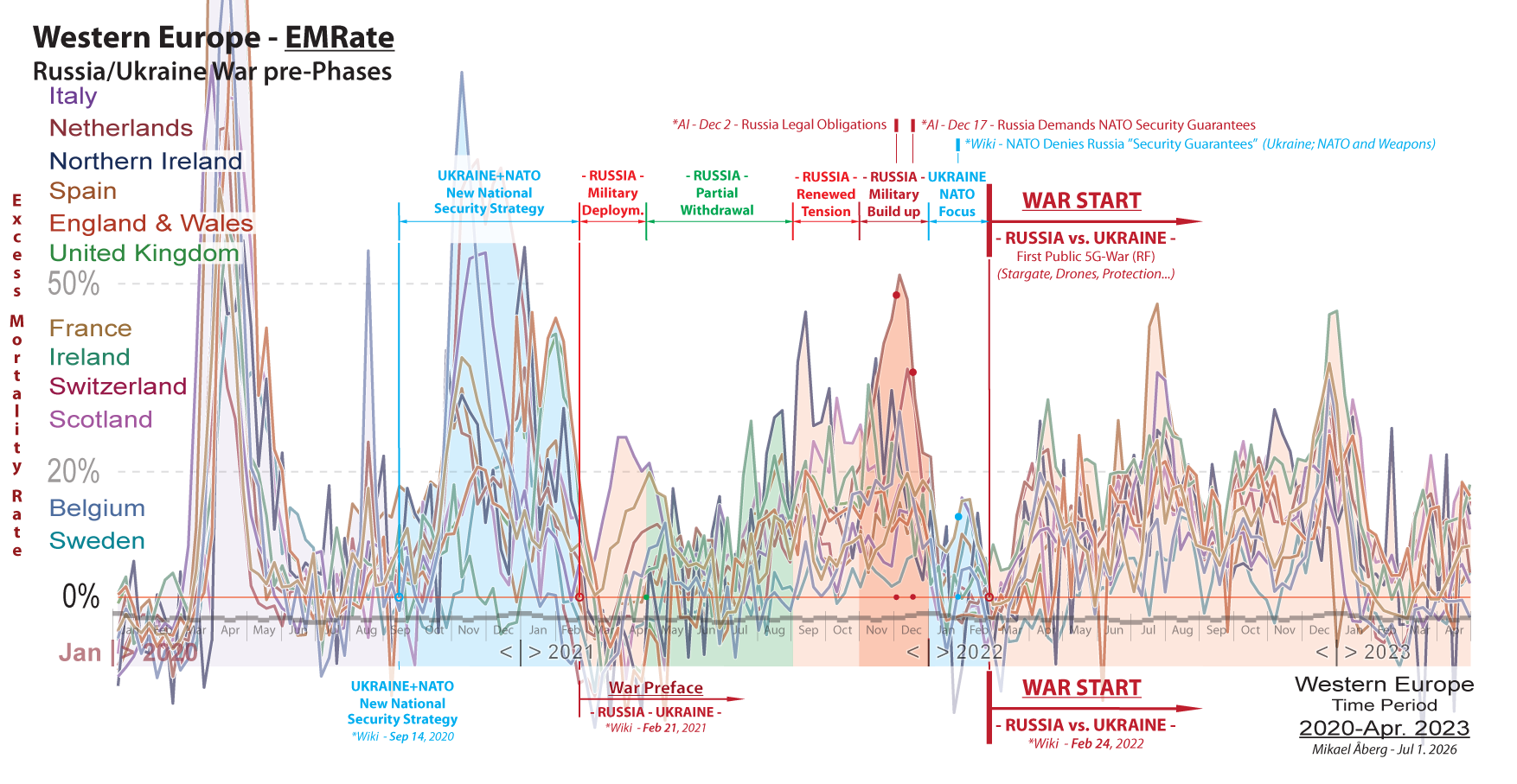
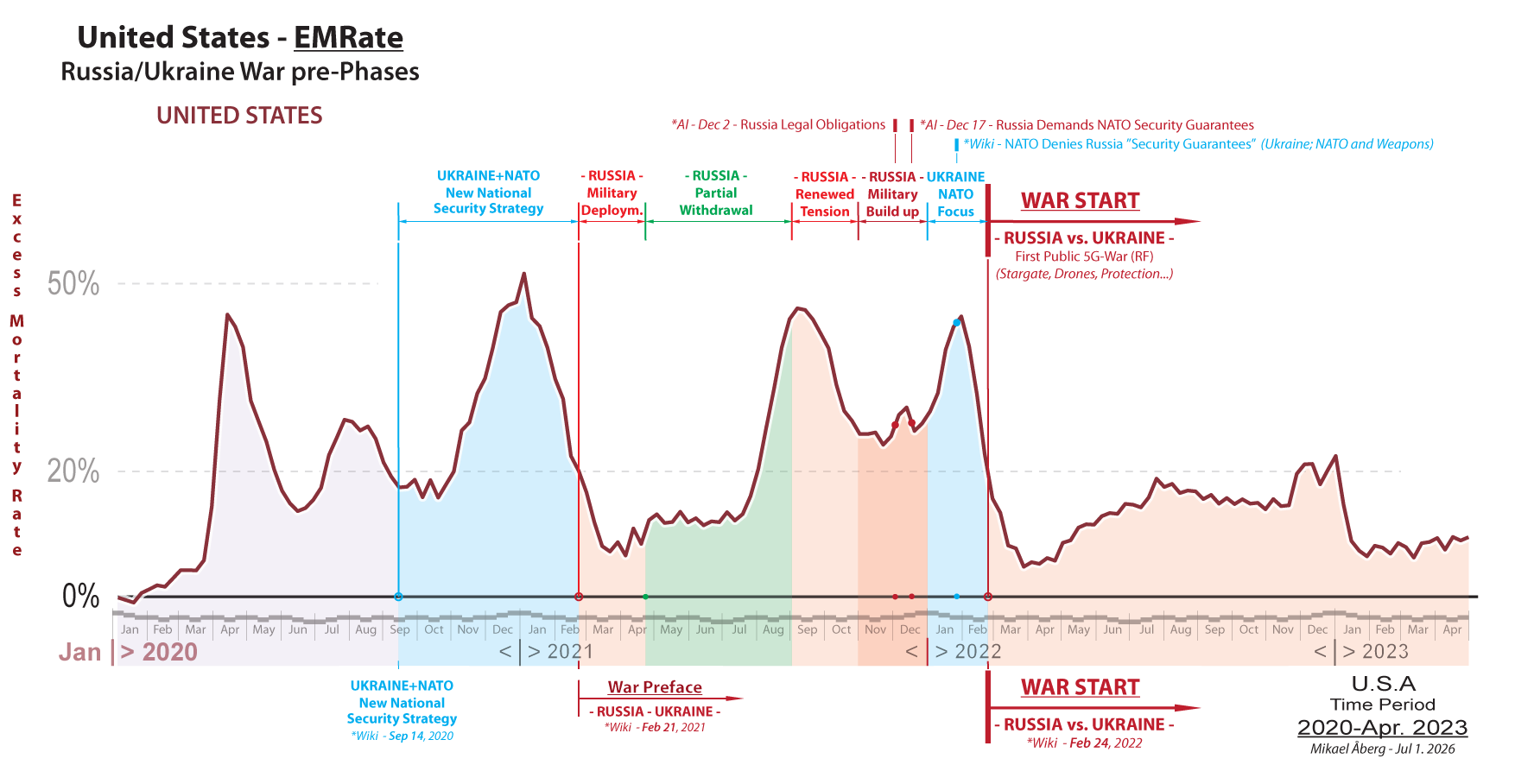
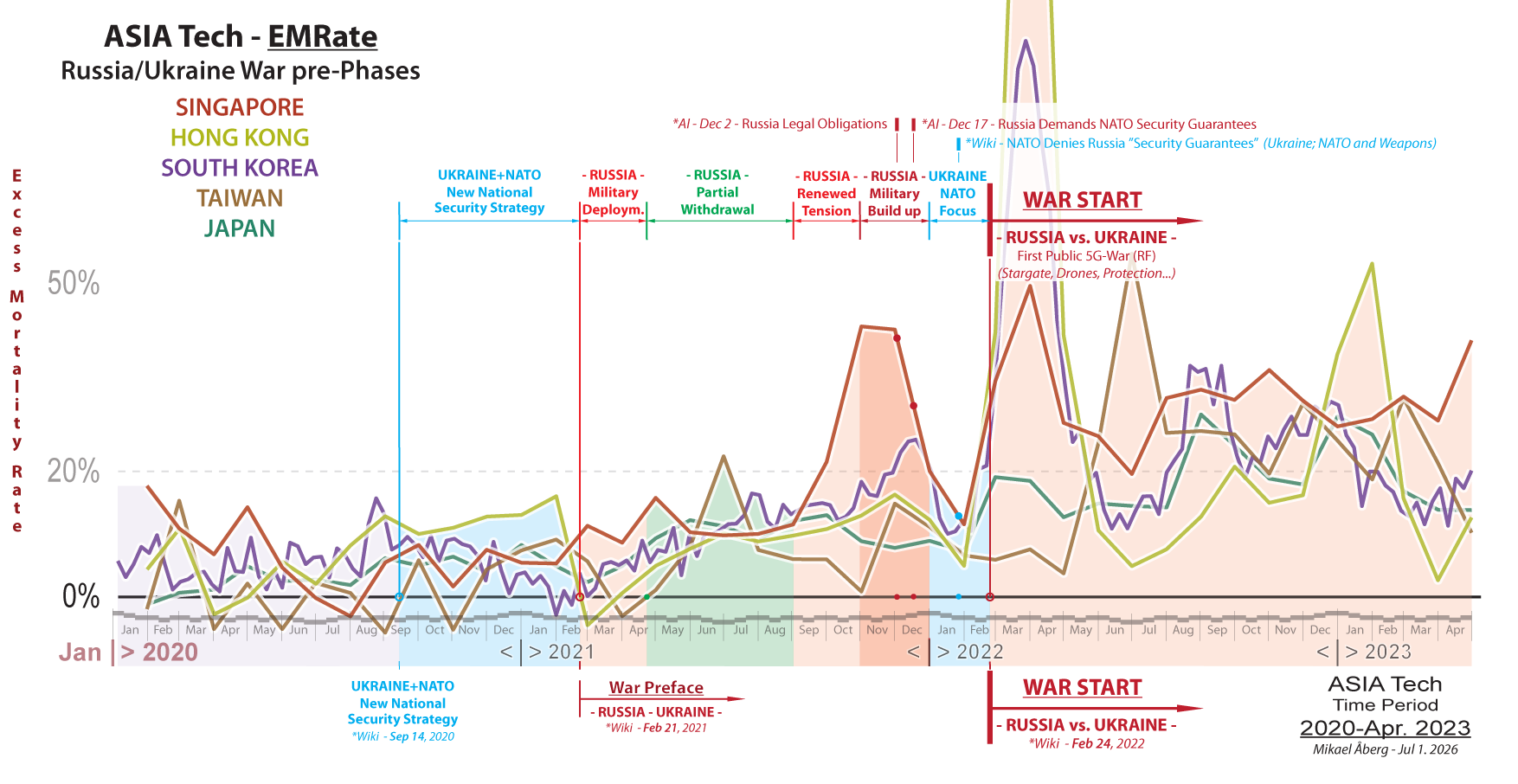
| Picture = Link | Russia-Ukraine pre-War Phases vs. EMRate |
New Window |
|||
 |
 |
 |
 |
 |
 |
Russia |
Ukraine |
Eastern Europe |
Western Europe |
United States |
Asia Tech |
"Close Window"